
|
Lyndon D Taylor MD LLC |
|
The Excellent Care You Need, The Compassion You Deserve |

|
Lyndon D. Taylor, MD 1100 Lake Street, Suite 260 Oak Park, Illinois 60301 |
|
To contact us: |




|
LYNDON TAYLOR OB/GYN |

|
Advanced Female Pelvic Reconstructive Surgery |
|
Treating prolapse without hysterectomy
Advanced surgical choices for treating pelvic organ prolapse |
|
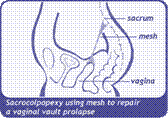
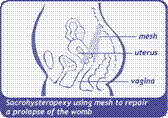
Advanced female reconstructive surgery is a new treatment option that benefits women by not removing the uterus, but restoring it back to its more normal state. Vaginal hysterectomy (for uterine prolapse) is the traditional treatment that removes the prolapsed organ altogether. This was a common choice for surgeons; however, today patients want to avoid hysterectomy for pelvic organ prolapse. Unfortunately, most surgeons are not trained in advanced female reconstructive surgery and think you must always remove the uterus to repair pelvic organ prolapse. This is no longer true. Click here now to request a Free Consultation with Dr. Lyndon Taylor. Advanced Female Reconstructive SurgeryA Modern Approach to Conservative SurgeryConservative surgery looks to conserve or preserve the uterus, enhancing sexual function and retaining childbearing capacities. There are three types of laparoscopic and minimally-invasive procedure to achieve this ideal result: restoring the pelvic anatomy to its original location without hysterectomy. Laparoscopic Uterosacral Ligament SuspensionThis is a laparoscopic technique to shorten and strengthen the uterosacral ligaments to support and reposition the uterus. With this technique, a woman’s own anatomic support structures are used to restore uterine position — basically, pulling up the dropped uterus into the pelvic cavity. The ligaments are shortened and secured in the proper position through a laparoscopic suturing technique. No mesh is involved. This can be combined with other procedures, such as Laparoscopic Burch and TVT, to restore other functional defects such as cystocele, rectocele, and urinary incontinence. If you’ve already had a hysterectomy and have a vaginal vault prolapse, the uterosacral ligaments can be shorted to bring the top of the vagina back into the pelvis, restoring anatomic location and improving function. Laparoscopic SacrohysteropexyLaparoscopic sacrohysteropexy involves the use of a permanent polypropylene mesh, which is attached to the cervix and the sacral promontory (the first and second vertebra of the sacrum). The mesh is buried below the peritoneum to prevent adhesions. In this fashion, the uterus and cervix are suspended from the tailbone, restoring a normal anatomy, enhancing sexual function, and preserving childbearing capability. If you’ve already had a hysterectomy and have a vaginal vault prolapse, theis same procedure is called a laparoscopic sacral colpopexy,and is one of the most successful operations for suspending the vagina. Sacrospinous Ligament FixationThis vaginal procedure involves suspension of the vaginal vault to the sacrospinous ligament. It is completed vaginally at the same time as repair of cystocele, rectocele, or enterocele. The vaginal vault is attached by sutures to both the right and left uterosacral ligaments (bilateral SSLF). Some of these repairs incorporate a graft or mesh material to strengthen the repair. If you have urinary stress incontinence, you can have this repair with a TVT procedure.
Associated Vaginal Repairs
CystoceleDuring childbirth, the fascia is actually pulled off the bone when the baby’s head is delivered. This is why Kegels muscle excercises don’t work—because the tendon is pulled off of the bone and must be repaired surgically. Laparoscopic Paravaginal Repair restores or reattaches the vaginal wall at the arcus tendineus fascia pelvis, or “white line,” restoring normal anatomical position. If a patient has urinary stress incontinence, a Laparoscopic Burch can be performed. Cystoceles can also be repaired vaginally with the supplementation of graft or mesh material using various techniques. RectoceleTraditional rectocele repair has had less than ideal results. Modern techniques involve placement of graft or mesh material to augment these repairs, restoring vaginal function. EnteroceleHerniation of the small bowel into the rectovaginal septum can also be repaired at the time of rectocele repair. PerineoplastyHaving a baby may disrupt the muscles that keep the opening of the vagina narrow. Patients often complain their vaginas are “gaping” and that sexual intercourse is no longer the same after a vaginal delivery. The goal of perineoplasty is to restore the normal structure and function of the vaginal opening.
Questions to ask your doctor about your surgical treatment options:• Which surgery do you recommend and why? • Will it be done vaginally, abdominally, or laparoscopically? • How much experience do you have doing this procedure? • What are the potential complications? • How successful is the procedure? • Will it relieve all of my symptoms? If not, which symptoms are likely to remain and what can be done about them? • How might the treatment affect my sex life? • Will the surgery treat all of my prolapses? • Do I need treatment for incontinence as well and will this be done at the same time? If yes, what is the procedure? • What if I choose not to have surgery?
Before SurgerySex, older women and treatment optionsSome doctors may assume that older women are no longer sexually active and this can affect the range of treatments that are offered to you. If you are an older woman and are sexually active, or intend to be, make it clear to your doctor that this is an important part of your life. Some treatments have a higher risk than others of leading to painful sex and one treatment, colpocleisis, closes off your vagina entirely, making sexual intercourse impossible. Diagnosis — before your operation, you and your doctor should be confident that your diagnosis is accurate. It's very common to have more than one type of prolapse at the same time and each one should be taken into consideration when planning treatment. Tests — your doctor may give you a series of bladder tests before your operation even if you don't have bladder symptoms. This is because your prolapse may be masking stress incontinence by pushing against your urethra and preventing urine from leaking. Repairing your prolapse may fix one condition but leave you with another - incontinence. If you do have incontinence, it may be treated at the same time as your surgery for prolapse. Estrogen cream — if you are past the menopause your doctor may suggest you use estrogen cream temporarily for a month or two before and after your surgery. This helps to strengthen your vaginal and pelvic tissues and may improve the outcome of surgery. Be aware of the possible outcomes — as with all surgery, the degree of success depends on many factors. While surgical treatment may be successful for one woman, it may have very disappointing results for another. The surgical treatments listed below may repair your prolapse, but they may not relieve all your symptoms, and in some cases, they may make symptoms worse or cause other problems. Statistics show that about one in three women who have a surgical repair go on to have additional surgery. Click here for more information on traditional treatment of pelvic organ prolapse. |
|
Advanced Female Pelvic Reconstructive Surgery avoids the need for hysterectomy |

|
Sacrocolpopexy |
|
Sacrohysteropexy (click images to enlarge) |

|
Dr. Taylor can help ensure you continue to live a full and satisfying life after treatment for prolapse |

|
With outpatient laparoscopic techniques, you return home the same day and resume normal activities in days instead of weeks |

|
Not ready for hysterectomy? New treatments offer hope for uterine prolapse. |